
News & Happenings


Ashton Weber: ABL’s Dancing Neuroengineer
Starting at the age of 2, Ashton Weber began dancing. And she kept dancing until she made her high school’s nationally ranked dance team, the St. Thomas More Sparklers. But then came college and a degree in biological engineering from LSU and acceptance into UAB’s neuroengineering doctoral program. Life meant dance had to take a back seat. “Few people at UAB know the dancer part of me,” she said, “and many people back home don’t know the neuroengineer part.”
For Ashton, though, the worlds of dance and neuroscience complement each other in unexpected ways. The discipline and focus developed through years of dance training are valuable assets in the laboratory. "Dance taught me the importance of precision, discipline, and the power of observation – skills that are directly applicable to my work in neuroscience.” Thus, the transition between the two worlds is not as unusual as it may seem.
Dancing is also what led Ashton to find her way into a neurorehabilitation lab. Her undergraduate degree in Engineering and her interest in movement dynamics and prosthetics, led her to brain-computer interfaces (BCIs) for rehabilitation. Being in the Alabama Brain Lab has allowed Ashton to explore more of what is possible with BCIs, leading her to her current project involving neurofeedback to improve cognitive function.
More specifically, Ashton is using EEG to better understand the brain waveforms associated with visual attention and processing speed. Older adults do not process relevant stimuli as quickly as younger adults, but brain modulation through neurofeedback may offer mediation.
Growing up, Ashton’s parents have always been her biggest inspiration. Whether it be long dance practices or late-night studying, they were loving and supportive. “My mom shows me how to be a strong woman and leader in STEM, and my dad reminds me to be myself without hesitation. ‘‘His lifelong advice to Ashton: “ Go instead where there is no path and leave a trail.”
After completing her PhD, Ashton plans to work in research and device development for rehabilitation.
Read the Latest
-
![]()
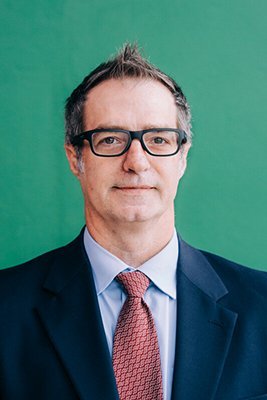
“Dr. Impossible” aims to bring brain tech to the people
May 1, 2023
-
![]()
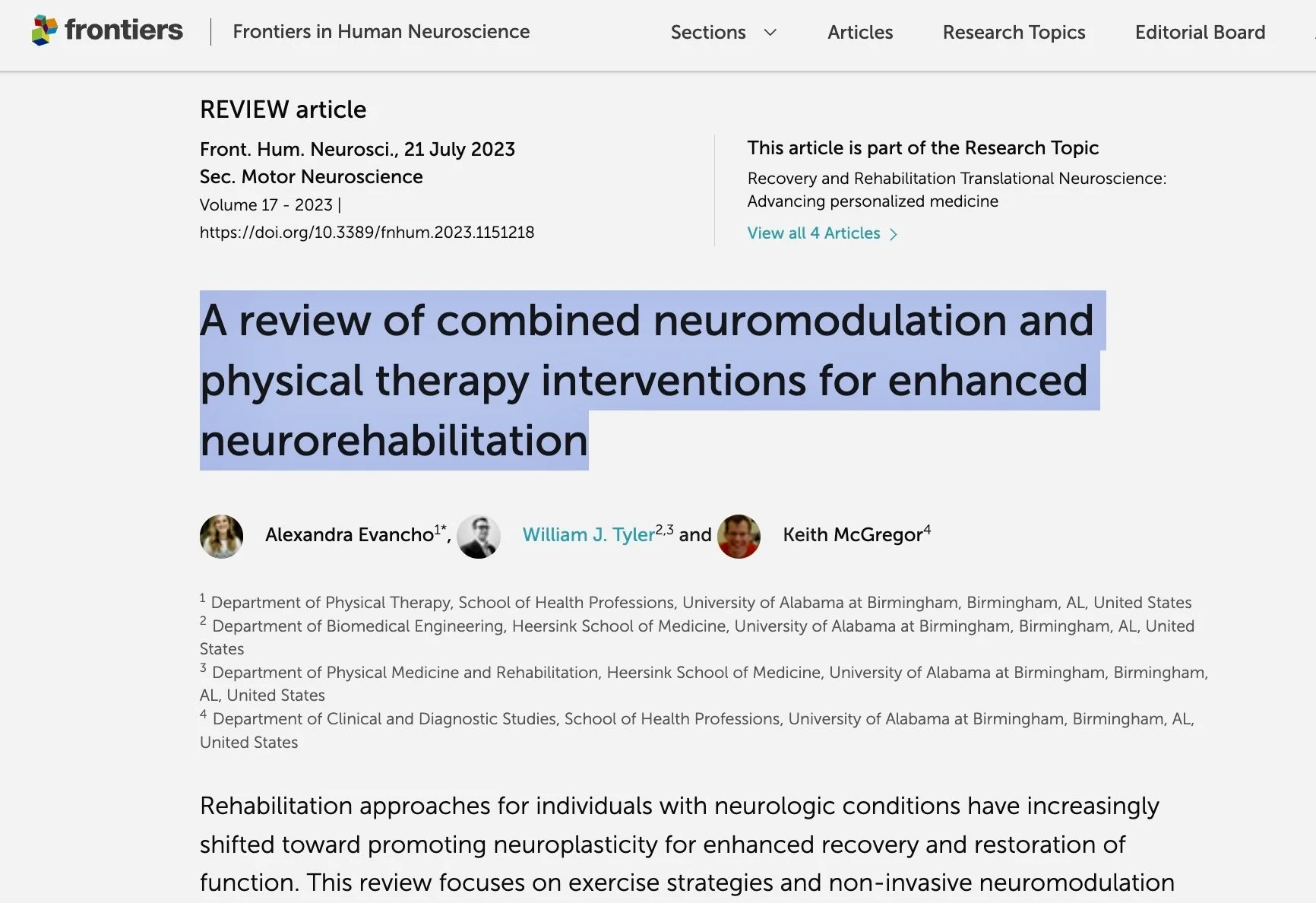
Dr. Evancho's first publication is now available online.
July 21, 2023
-
![]()
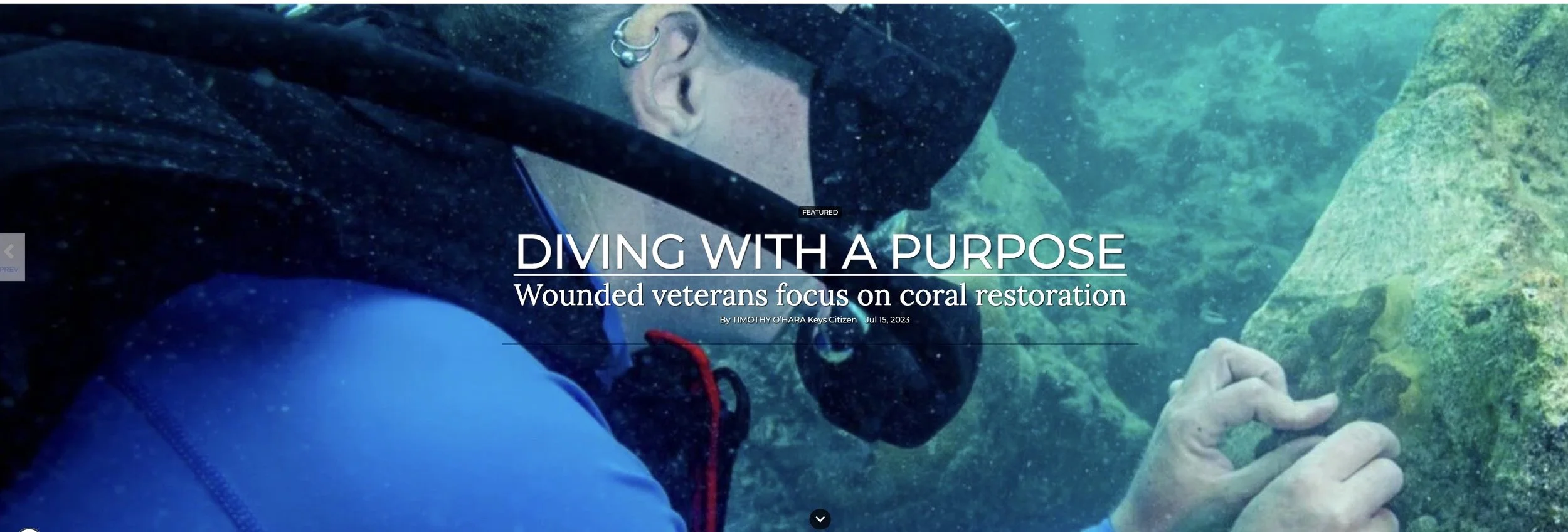
Dr. Tyler Dives with Wounded Veterans
July 18, 2023
-
![]()
Alexandra Evancho, DPT, receives junior researcher grant for proposal: Enhancing Neurorehabilitation with Neuromodulation for Individuals with Parkinson’s Disease
February 13, 2023
-
![]()
ABL proud to announce connection to new psilocybin clinical trial
March 21, 2023
-
![]()
New $1 million NSF project seeks to map circuits that underlie key brain functions
October 25, 2022
-
![]()
Our neuromodulation work for sports performance featured in ESPN docuseries "Enhanced"
Episode “Mind Gurus”—Focus on our work starts at 11 min 50 sec



Upcoming Events
-
Why Sports in Space Could Be the Next Big Thing. The Wall Street Journal, July 2022.
Aiming ultrasound at the brain raises hope of new treatments. Science, June 2020.
July, 2018. Our work on transdermal auricular vagal nerve stimulation (taVNS) for sports performance enhancement was featured in the ESPN Films docuseries "Enhanced" produced by Alex Gibney of Jigsaw Productions. Our work is highlighted in the episodes “Skill Training”, as well as “Mind Gurus” directed by Paul Taublieb of Taublieb Films. Watch “Mind Gurus” here. Focus on our work starts 11min 50sec.
Modulation and performance enhancement was featured on the History Channel’s “In Search Of” hosted by Zach Quinto (aka "Dr. Spock"). We used some tFUS and TMS to tweak some of Zach’s brain circuits before putting him through a performance test. We also chat briefly about the important and concerning topic of bad actors using neuromodulation as weaponized technology. Watch Episode 7 of "In Search Of" hosted by Quinto here.
Ultrasound for the brain. Nature, November 7, 2017.
Researchers receive DARPA funding to study language learning. UMD Division of Research, May 10, 2017.
Stimulating the expansion of human cognitive potential. ASU Full Circle, April 26, 2017.
TNT researchers set out to advance pace and effectiveness of cognitive skills training. DARPA News and Events, April 26, 2017.
Brain-zapping gadgets promise to make you a better you — smarter, stronger, even happier. Washington Post, Mar. 29, 2016
Can This Gadget Give You Mental Superpowers? - Video GQ, Sep. 23, 2015
Therapy Borne on Electrical Currents. The New York Times, May 4, 2015
Hacking your brain. The Economist, March 7, 2015
The Electric Mood-Control Acid Test. Technology Review, March 12, 2015
Digital Trends Top Tech of CES 2015 award winners. Digital Trends, Jan. 8, 2015
Blasting the Brain with Ultrasound Enhances Sensory Abilities. Gizmodo, January 2014
Like Clockwork. New Scientist, September 2013
Could ultrasound stop a seizure? The Apex of Trauma Care, Spring 2012
Circuit Training, New Scientist, April 2011
Noninvasive Ultrasound Pulses Could Treat Neuro Disorders, Enhance Cognitive Function. Popular Science, June 2010
Brain Stimulation with Ultrasound may Enhance Cognitive Function. Science Daily, June 2010
Surgery using Sound and Light. The Economist - Technology Quarterly, December 2009
Targeting the Brain with Sound Waves. Technology Review, June 2009
Sound and No Fury. The Economist, January 2009
Sound Waves for Brain Waves. IEEE Spectrum, January 2009
Ultrasound Shown to Exert Remote Control over Brain Circuits. Science Daily, November 2008
Dr. McGregor’s work on exercise and cognition is featured in Your Fantastic Mind.